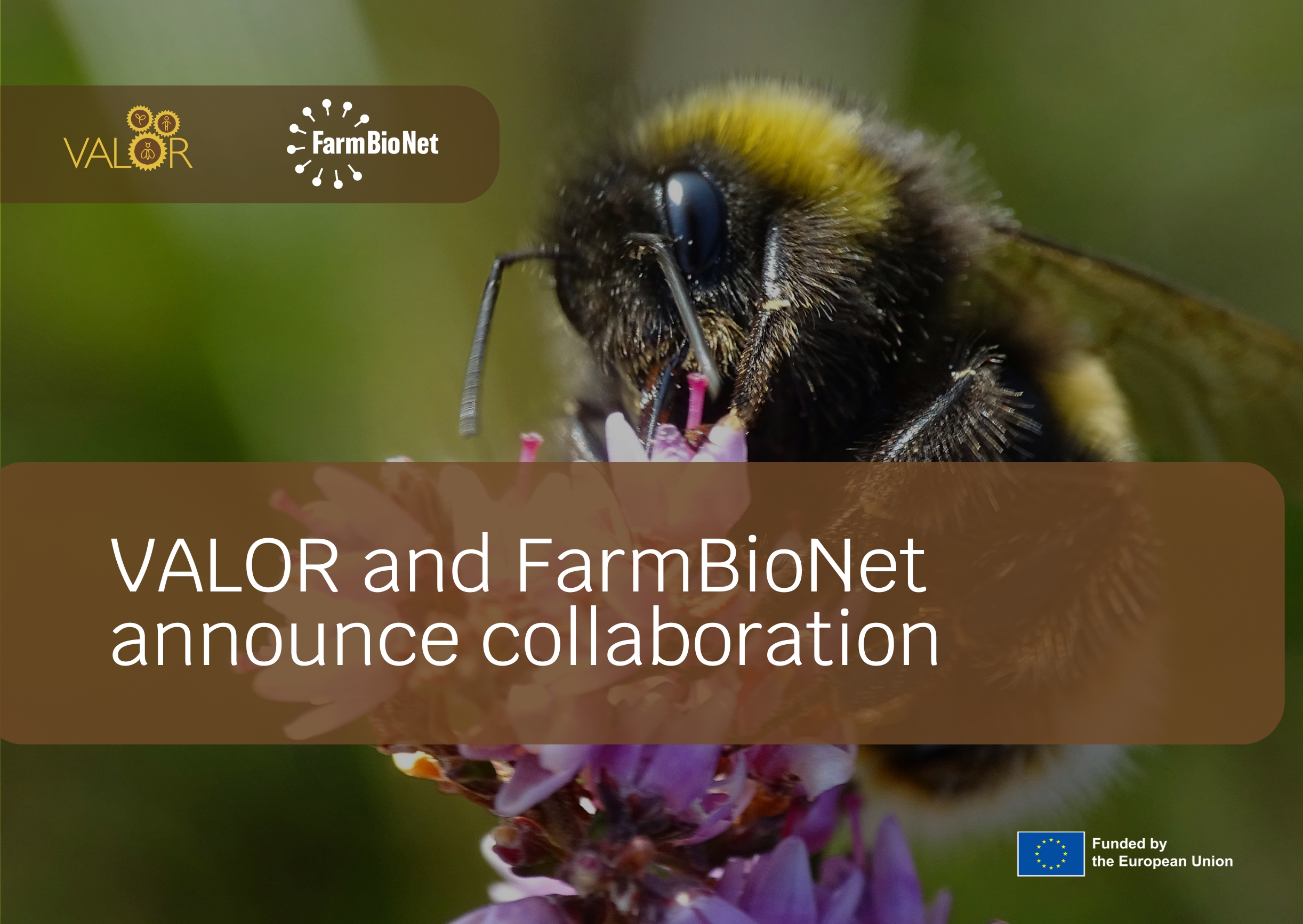
VALOR and FarmBioNet announce collaboration to protect pollinators and biodiversity
VALOR has entered into a strategic partnership with FarmBioNet, a EU‑funded project that promotes biodiversity‑friendly farming across Europe. Through this collaboration, the two projects will join forces to share knowledge and strengthen efforts to protect pollinators and farmland biodiversity.
VALOR brings together interdisciplinary researchers, NGOs, and businesses to understand how pollination benefits ecosystems, farms, value chains, and human well‑being. Its work feeds into forecasting models and decision‑support tools co‑developed with stakeholders, helping different actors anticipate how changes in pollinator populations could affect their activities under a range of future scenarios.
FarmBioNet supports biodiversity‑friendly farming practices - such as managing native hay meadows, maintaining flowering hedgerows, creating native tree lines, reducing pesticide use, and building nesting sites for solitary bees - through 12 national networks that connect farmers, researchers, and policymakers. These practices make agricultural landscapes more diverse and connected while still producing food, feed, fibre, and fuel, and help combat climate change and maintain healthy ecosystems.
By combining VALOR’s evidence‑based models with FarmBioNet’s on‑the‑ground experience and networks, the collaboration aims to:
- Enhance knowledge exchange between science and farming practice,
- Promote management options that support pollinators and biodiversity,
- Strengthen decision‑making for farmers and land managers, and
- Encourage cross‑regional learning and more efficient use of shared tools and networks.
VALOR project coordinator Dr. Tom Breeze commented:
"FarmBioNet is a really exciting project that is doing a lot to really enhance the uptake of biodiversity‑friendly policies by working with farmers across Europe. VALOR is collaborating with them to generate information on the real costs of managing habitats for pollinators and examining ways we can make these options more financially viable, resilient, and attractive to farmers.”
The partnership reflects how large‑scale EU research projects can work together to turn scientific insights into practical, on‑farm actions that benefit both farmers and ecosystems.
Read more about the collaboration from FarmBioNet’s perspective.